
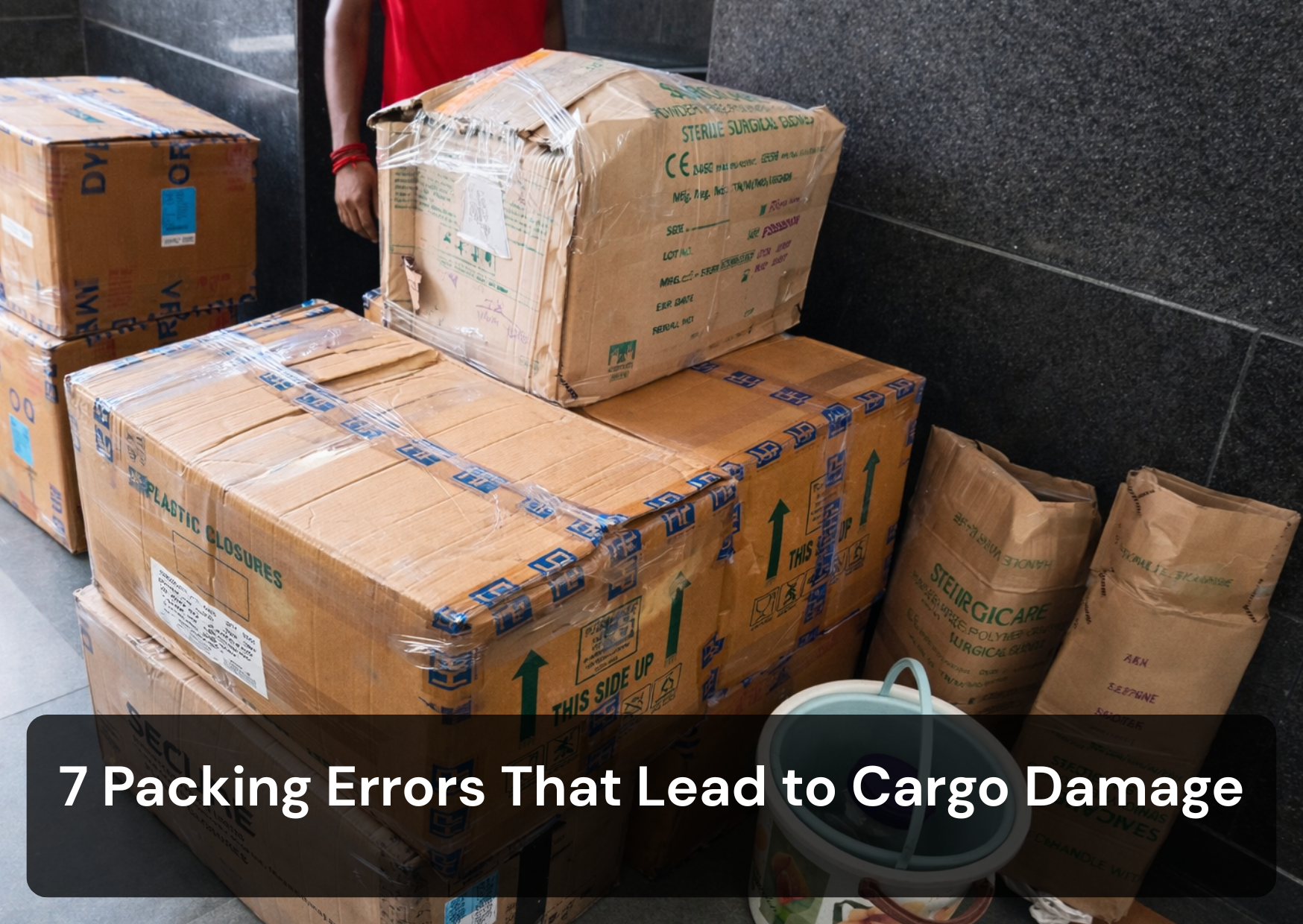
7 Packing Errors That Lead to Cargo Damage
When people book Cargo Services, one fear comes to mind for almost everyone: “Will the goods arrive safely?” or “Will they arrive broken?” This worry feels natural because once the cargo leaves your place, you cannot watch over it. In reality, most cargo damage begins before the vehicle even moves. It starts at the packing stage. A poorly packed item has no chance of surviving long-distance road travel, warehouse handling, or rail transport.
Whether you ship household goods, office equipment, or commercial material, packing decides the fate of your cargo. Even the best movers and packers cannot protect items that were packed incorrectly. Rail cargo adds another layer of risk because goods pass through multiple handling points. This blog explains the seven most common packing errors that lead to cargo damage and how you can avoid them.
Avoid These Common Packing Errors To Save Your Goods:
1. Using Weak or Low-Quality Packing Material
One of the biggest mistakes is choosing thin boxes, old cartons, or low-grade wrapping material. Weak packaging collapses under pressure during stacking or transit.Cargo moves through many stages. It gets loaded, stacked, shifted, and unloaded. Railway cargo faces even more handling at terminals. If the box lacks strength, it cannot protect what is inside.
Always use strong corrugated boxes, quality bubble wrap, and thick stretch film. Good movers and packers choose materials based on weight and fragility. Strong outer protection gives your cargo the first layer of safety.
2.Skipping Inner Cushioning
Many people wrap items from the outside and ignore what happens inside the box. Empty space allows items to move during transit. This movement causes cracks, dents, and breakage.
Glassware, electronics, and machine parts need internal cushioning. Use foam sheets, paper padding, or air pillows to stop movement. Every item in the box should stay in place.In rail cargo, vibration remains constant over long distances. Without inner padding, damage becomes almost certain.
3. Mixing Heavy and Light Items Together
Placing heavy items in the same box as light or fragile goods creates pressure damage. Weight shifts during transport. Heavy objects crush lighter ones. This error often happens during home shifting and bulk packing. People try to save cartons by filling them fully. The result is broken items inside intact boxes. Movers and packers follow weight limits for each box. Heavy tools, books, or metal parts require separate cartons. Light items deserve their own space.
4. Poor Sealing and Weak Taping
Many people close a box and place one strip of tape on top. They believe this is enough. It is not. During transport, boxes get lifted, stacked, and moved many times. They shake on the road. They slide during loading. Other cartons press on them from above.
Weak tape comes loose under this pressure. The box opens slightly. Items inside start moving. When things move inside a box, they hit each other. This is how cracks and breakage begin, even when the outer carton still looks fine.
Strong sealing keeps everything in place. Use good-quality tape. Seal the bottom first. Then seal the top firmly. Add tape along the edges and corners. This simple habit keeps the box closed from start to end and protects what is inside.
5. No Labeling or Incorrect Marking
People often assume that handlers will know which boxes need care. In reality, cargo moves through many hands. Loaders, drivers, and warehouse teams handle hundreds of cartons every day. They cannot guess what sits inside each box.
When a carton has no label, it gets treated like any other. Fragile items are often placed under heavy loads. Boxes meant to stay upright turn sideways. Damage occurs not because someone is careless, but because there is no guidance. Clear marking solves this. Labels such as “Fragile,” “This Side Up,” and destination details guide every handler.
6. No Labeling or Incorrect Marking
When boxes carry no labels, handlers cannot tell what is inside. Fragile items get placed under heavy loads. Boxes that should stay upright get turned sideways. This leads to damage even when packing is done well.
During railway cargo movement, many consignments travel together. Without clear markings, your cartons are handled the same as metal or machine parts.
Write clear labels on every box. Mark fragile items clearly. Show which side should face up. Add destination details. Simple labeling guides safe handling and protects your goods at every stage.
7. Packing Without Understanding the Transport Mode
Many people pack goods the same way for all movements. This mistake becomes costly during railway cargo and long-distance transport.Road cargo faces bumps and turns while rail cargo faces vibration and stacking pressure. Each mode needs a different packing approach.
Movers and packers who handle Cargo Services professionally adjust packing based on distance and transport type. Rail cargo requires stronger outer layers and tighter inner support. When packing ignores transport conditions, damage becomes likely, no matter how careful the driver is.
Final Thoughts!
Safe delivery does not begin on the road or at the railway station. It begins the moment packing starts. Small choices decide the outcome of every shipment. The box you choose, the way you seal it, and how clearly you mark it all shape what happens later. This is where choosing the right cargo service provider is necessary. LR Cargo approaches packing and transport with care, clarity, and experience. They focus on proper packing, clear handling, and responsible movement at every stage. If you are looking for Movers & Packers in Delhi NCR, you can count on us.